
Final instalment by John Aldridge
You can read part 1 of Get in Gear here
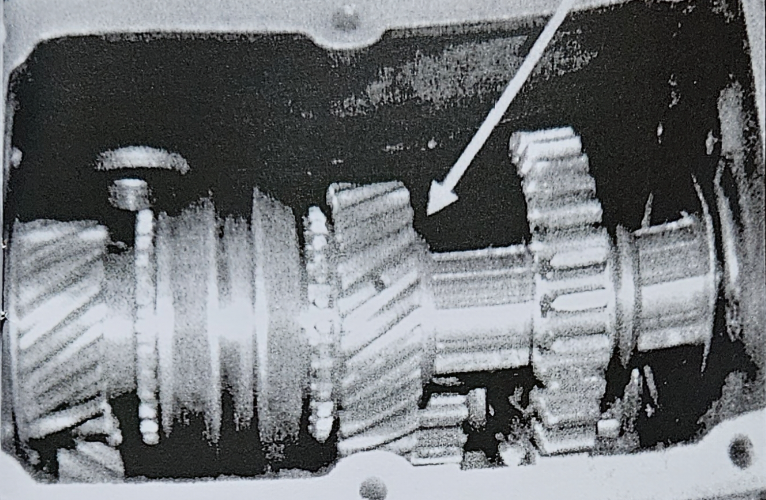
The end float on the second speed gear was 22 thou. And I couldn’t help thinking that this may be partly to blame. A shim of 15 thou. would eliminate most of the end float whilst allowing the usual tolerance required by Ford boxes (viz 5-8 thou).
With some patience and difficulty, I was able to cut the shim to pattern from some material I ordered from Nordian several years ago for this purpose. (It pays to think ahead sometimes!) The employment of fly press, gilbows, scissors and files give some indication of the techniques required for this delicate operation to produce a very elementary mechanical part! The newly fashioned shim was then inserted between the rear holding washer and the second speed gear itself.

Well, the shim certainly improved the end float on the second speed gear—at least on casual inspection. The bearing for the second gear itself seemed very little worn; and this I assume should be the case as it is not in motion when third gear is selected and thus is not subject to much running wear only that caused by heavy duty in the short term. I did, however, take the opportunity to replace the front main bearing as a precaution.
Regrettably, there is no way to test the working of the gearbox unless it is in situ. So the long process of replacing both the box and the rear axle, floorboards and trim was begun. I was grateful for the foresight that committed so many blind nuts to the floor and bulkhead panels as this saves much fitting time, broken skin and bad temper!
The Second Gear Shim
The moment of truth arrived to test the car on a day when the weather was unusually sunny and clement. Gingerly the K1 was driven slowly for a few miles—initially double declutching to give the box a chance to “bed in” – whilst awaiting the possibility of strange noises, bits falling off etc. All was well and straight changes up and down into second gear worked well without the anticipated crunch of dogs. So far so good, but now would it remain in gear on the overrun?
Approach roundabout, change down (no crunch) decelerate, accelerate out of the apex—Success!
Of course the synchro is not the best design and the later version is probably more robust. Mind you, neither come up to the standard of a modern box but Allard owners are, if nothing else, more than qualified to drive in sympathy with sixty year old gearbox technology without disgracing either themselves or their Allard.
John Aldridge