
by John Aldridge
With all Allards nothing is ever straight forward and only the most consummate optimist would ever believe that his car is “finished” or running “as good as new”!
True to type, the last leg of the marathon restoration of my K1 took place last June when I drove over to Kent to have the hood and side screens fitted by Alec Tillett. Naturally its last journey, on the M25 without this essential weather equipment, had to be in really torrential rain but it did give the opportunity to get the dust off my old Musto offshore sailing suit (or should I say wet weather gear) and give it a good clean!
From its first fully equipped run back from Kent in the summer, the K1 suffered from that well known habit of slipping out of second gear on the overrun. This is not a major problem for normal motoring. It can, however, be disconcerting if it occurs when, before a bend, engine braking is needed, only to find that there is no drive on the exit. This becomes must more important, of course, when motoring competitively.
There is nothing sudden when the K1 drops out of second gear as it just gently slides out of mesh without a sound. Some fellow sufferers simply use a bungy to maintain the lever in its correct position in the H, others employ the more expensive technique of a complete and professional rebuild. The really enterprising owners convert to a more effective alternative to the Ford 3 speed box.
The bungy, whilst effective, seems just a tad Heath Robinson, whilst my Scottish ancestry dictates that spending real money to rebuild or replace the gearbox is a non-starter.
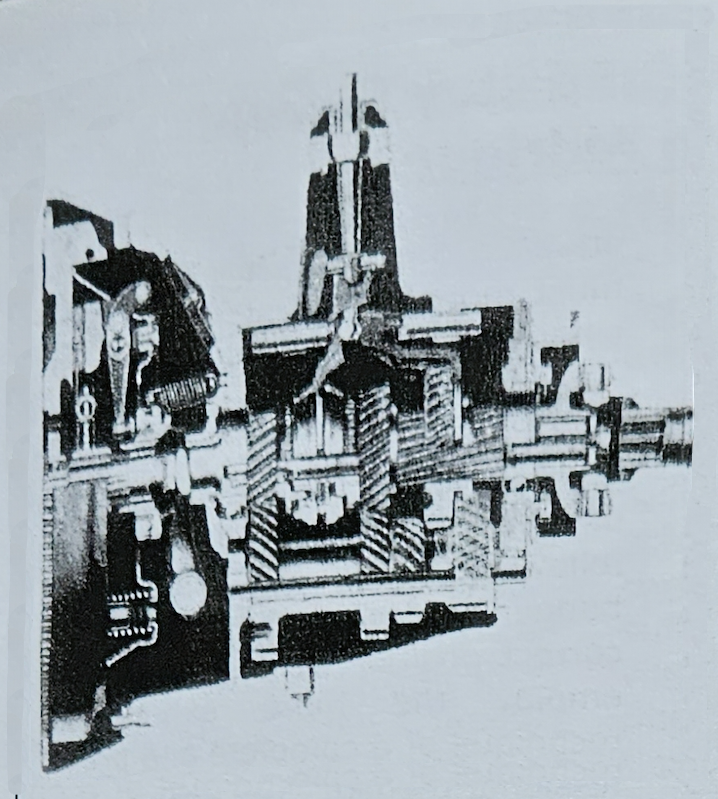
As usual I believed that I could sort the problem myself if I sought good advice from the professionals at Belcher Engineering, at Bury St Edmunds, who gave me much of their time when examining the box.
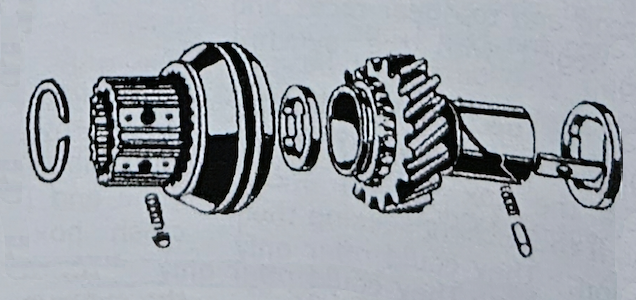
The box itself is a top loader with the early and less robust synchro unit. This early synchro-mesh did not employ the replaceable synchro rings of the later models, but uses the soft metal faces which butt the second and top gear faces and is integral with the synchro hub.
The decision was taken (with some reluctance) to remove the box (again) and I took it to Belchers seeking their opinion. They could offer only limited advice as there was little apparently amiss. They did, however, point out that there was some play on the “Second speed gear”. It did appear that the synchro unit or as it is known in the manuals, the “second and high clutch hub” should “click” into place when engaging the gear dogs. This is when the three sprung balls on the hub drop into a groove in the splines of the outer hub. This could only be achieved when access to the cluster on the bench allowed an additional nudge from a screwdriver.
In situ and in action this did not happen due, it seems, to excessive wear of the soft metal surface of the synchro hub. The only real cure was to replace all the working parts — the expensive option!
Having thought about it over time, I considered that the problem could be rectified by inserting a spacer washer on the main shaft between the hub and the second speed gear; believing this would give the synchro hub more “bite”. Having reinstalled the box the first test drive proved that I was wrong. First, all the synchro effect had gone and I was driving a basic crash box. Worse, it was still slipping out of second gear on the overrun. I did get very proficient at double declutching, but the technique employed was not perfect and sooner or later I was going to strip the dogs on second and third and I was growing tired of gritting my teeth every time I changed gear!
More research was required but as I was having quite a bit of fun with the car it was not until January 2005 that I felt it necessary to remove the box (again).
Those who have attempted this removal procedure will know it is not to be taken lightly. There are two methods for removing the box from the car; both equally tedious and time-consuming. Either move the engine forward to release the box or leave the engine supported in situ, and drop the rear axle to pull the prop shaft back to enable to box to be withdrawn through the cockpit. Force of habit prompted choice of the latter method but either way there is a lot of work required.
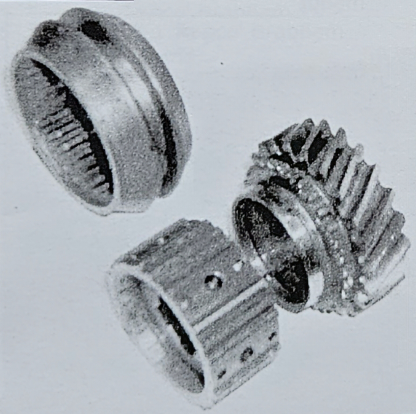
As part of the gearbox rebuild this time, I felt it would be necessary to replace or restore the soft metal inserts on the synchro hub. It appears impossible to buy these inserts off the shelf, so I asked a local engineering company to help.
At first they proposed to add some additional “bronze alloy” to the inserts but as they collapsed on the application of heat new inserts had to be machined. I hoped that this would enable improved synchro effect and allow sufficient travel for the outer shell of the synchro unit to “click” in place to prevent involuntary disengagement on the overrun. However, I have been here before and I was not convinced that rebuilding the synchro hub would be the sole answer to the problem.
John Aldridge