
@neil-bennett
Forum Replies Created
-
AuthorPosts
-
14 January 2026 at 10:00 AM #11744
 Neil BennettParticipant
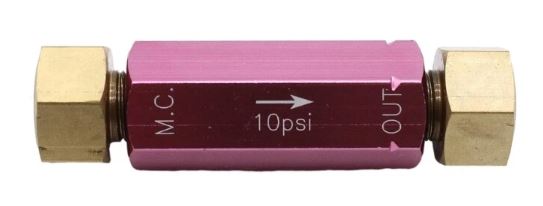
James’s problem would appear to be fluid flowing back into the master cylinder (driven by brake shoe springs) rather than from the m/c reservoir, when the pedal is released from full travel. A residual check valve prevents that reverse flow.
 13 January 2026 at 7:57 PM #11738Neil BennettParticipant
If all else fails fit a residual check valve.
27 February 2025 at 12:50 PM #10589Neil BennettParticipantDone it now, but the spacer between the bearings had to be pushed sideways in order to free a lip on a bearing inner race for a drift.
4 April 2024 at 9:27 AM #8149Neil BennettParticipantNo, Jim has worked on many Ford V8s but never on a Steyr. I need to know the angle of the Steyr V – anybody?
Alternatively, who rebuilt the engine for the Steyr Allard when Kerry had it?
13 March 2024 at 10:25 AM #8150Neil BennettParticipantAha! David Kinsella’s book has the answer: 60°.
25 June 2023 at 10:52 AM #7758Neil BennettParticipant6 February 2023 at 10:56 AM #7607Neil BennettParticipantThat’s an example of the last US production run of Ford flathead engines from 1949 to 1953, designated 8BA, with 24 cylinder head studs per bank and a capacity of 255 cu. ins. (4184 cc.) from its 3.3/16″ bore and 4″ stroke. Those engines were also made under licence by SIMCA in France for their military vehicles, and this engine has all the signs of being French – the cylinder head markings, the paint finish and the cast-in boss at the rear of the left cylinder bank which housed the governor and hour meter. The square black oil union looks French too.
 4 February 2023 at 1:51 PM #7598Neil BennettParticipant
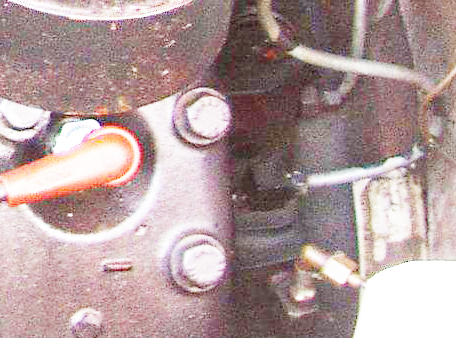
Many thanks Tim. That isn’t the car I had thought, but here it is for others to peruse:
 2 February 2023 at 11:16 PM #7595Neil BennettParticipant
May we see a photograph of this car, please?
“Previous owner for 68 years” strikes a chord. I may have some information.
Neil.
16 December 2022 at 12:03 PM #7493Neil BennettParticipantWhich transmission do you have – is it Ford torque tube? If so, the speedo drive is taken from the top of the torque tube just behind the hemispherical joint on the back of the gearbox.
Hope this helps. Neil.
 9 December 2021 at 11:11 PM #8116Neil BennettParticipant
The first thing that springs to mind is fuel starvation. Having suffered a very similar problem in the midst of competition at Shelsley Walsh, the problem was eventually isolated to a short length of cotton-covered fuel hose which had gone porous under the effect of crap petrol (ethanol) and was allowing the pump to pull air, not fuel.
Good luck with it. Neil.
28 November 2020 at 11:21 PM #5613Neil BennettParticipantExcellent … “you’ll never be late if it’s a V8” …
 24 November 2020 at 7:29 PM #5600Neil BennettParticipant
Ben,
I think you meant 4.5 Imperial gallons, rather than quarts, ie. ~20 litres. The Ford flathead engine is the quickest way I know of boiling four gallons of water so internal cleanliness is important – use a commercial chemical scourer when the engine is running – heat is required for a good clean-out. Then add a surfactant like Water-Wetter to reduce the surface tension to the block internals.
Unadulterated plain water is by far the best coolant (with a surfactant). However, if you are not going to over-winter your car in a heated garage or drain it and lay it up, then anitifreeze is essential, 35% minimum, but the type of antifreeze is important.
At risk of teaching granny to suck eggs, and for the avoidance of doubt I offer the following descriptions:
Most commercial antifreeze formulations include a glycol (to suppress the freezing point and raise the boiling point), corrosion inhibiting compounds and a coloured dye (commonly orange, green, red, or blue fluorescent) to aid in identification. A 1:1 dilution with water is usually used, resulting in a freezing point in the range of minus 37 °C to minus 42 °C, depending on the formulation. There are two basic types of antifreeze available today dependent on the corrosion inhibitors used:
Inorganic Additive Technology
This is the traditional coolant based on inorganic additives and is called inorganic additive technology (IAT). It is a tried and proven chemistry that provides a fast acting protective film. The additives deplete and the coolant needs to be drained and replenished every couple of years. This type can be used on all mixed metal engines with components including steel, cast iron, copper, brass, aluminium and solder without any detrimental effect.Organic Additive Technology (neutralised acids)
The newer OAT coolants work differently than the older silicate based IAT coolants. Aluminium and ferrous metals form a surface-layer of corrosion in the presence of moisture, even with the little bit of moisture in the air. OAT coolants prevent this metal-oxide layer that protects the surface against this corrosion. Inherent with their design, the OAT coolants last longer than the older traditional IAT coolants.This category of antifreeze cannot be used in systems containing yellow metals.
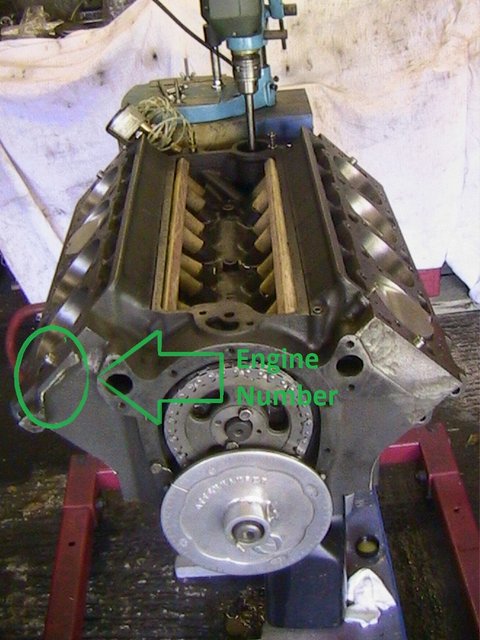
16 November 2020 at 11:13 PM #5566Neil BennettParticipantDifficult to tell from your photo, but the engine number is at the front of the block on a boss by the #2 cylinder, ie. on the right of the block looking forward.
I hope this leads you to it.
There will be ten digitsl: the first two are the year of manufacture, the second two are the model of the car it was originally fitted to, and then a six digit serial number.
 16 November 2020 at 7:50 PM #5563Neil BennettParticipant
The engine number is stamped on a boss on the front of the block, just by the right cylinder head.
-
AuthorPosts

