When an engine is being stripped down for total overhaul it is tempting to identify the valves by centre punching the top of the heads. By the time it is No. 16’s turn space is beginning to run out.
In September 1941 Ford’s War Dept. Vehicle Servicing Bulletin was emphatic. Centre punching valve heads was to cease forthwith because it could:
i) distort valve heads, ii) result in bent valve stems, iii) lead to incorrect seating of the valve and iv) allow a build up of carbon deposits under the head which might cause pre-ignition or “pinking”.
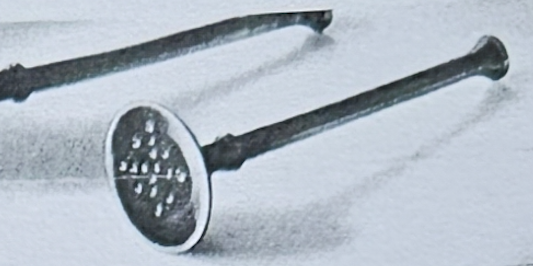
The method recommended for the marking of valves was to first make sure the valve was fully seated, then lightly stamp it dead centre with a number stamp. Ideally valves, guides and springs etc should be kept together and placed in special numbered carriers. Failing that a board could be drilled with 3/4” diameter holes for the valve stems.
An earlier Ford Service Bulletin reminded service managers that current production exhaust valves were of the surface hardened type and that inlet valves were not hardened. The guides for uses with hardened valves were “soft” but the guides for the non-hardened inlets were hardened. The “soft” inlet valves were marked by “IN” located near the Ford logo on the underside of the head.
To confuse matters neither soft or hard guides carried identification but, the bulletin suggests, the difference between the two types would be readily apparent as the soft guides would be shinier and brighter than the hardened type.
On no account should the soft inlet valve be used in an exhaust port meant for a hardened valve but conversely the hardened exhaust valve could be used in the inlet valve ports.
The logic of the soft valve and hardened guide combination being the fundamental good design practise of when two wearing parts were to work together, one of them should be sacrificial. It being in theory cheaper/easier to replace just the sacrificial part than both parts.