
- This topic has 10 replies, 3 voices, and was last updated 2 weeks, 4 days ago by

 Ben Stevens.
-
AuthorPosts
-
13 January 2026 at 6:46 PM #11724
 james smithParticipant
Advice please.
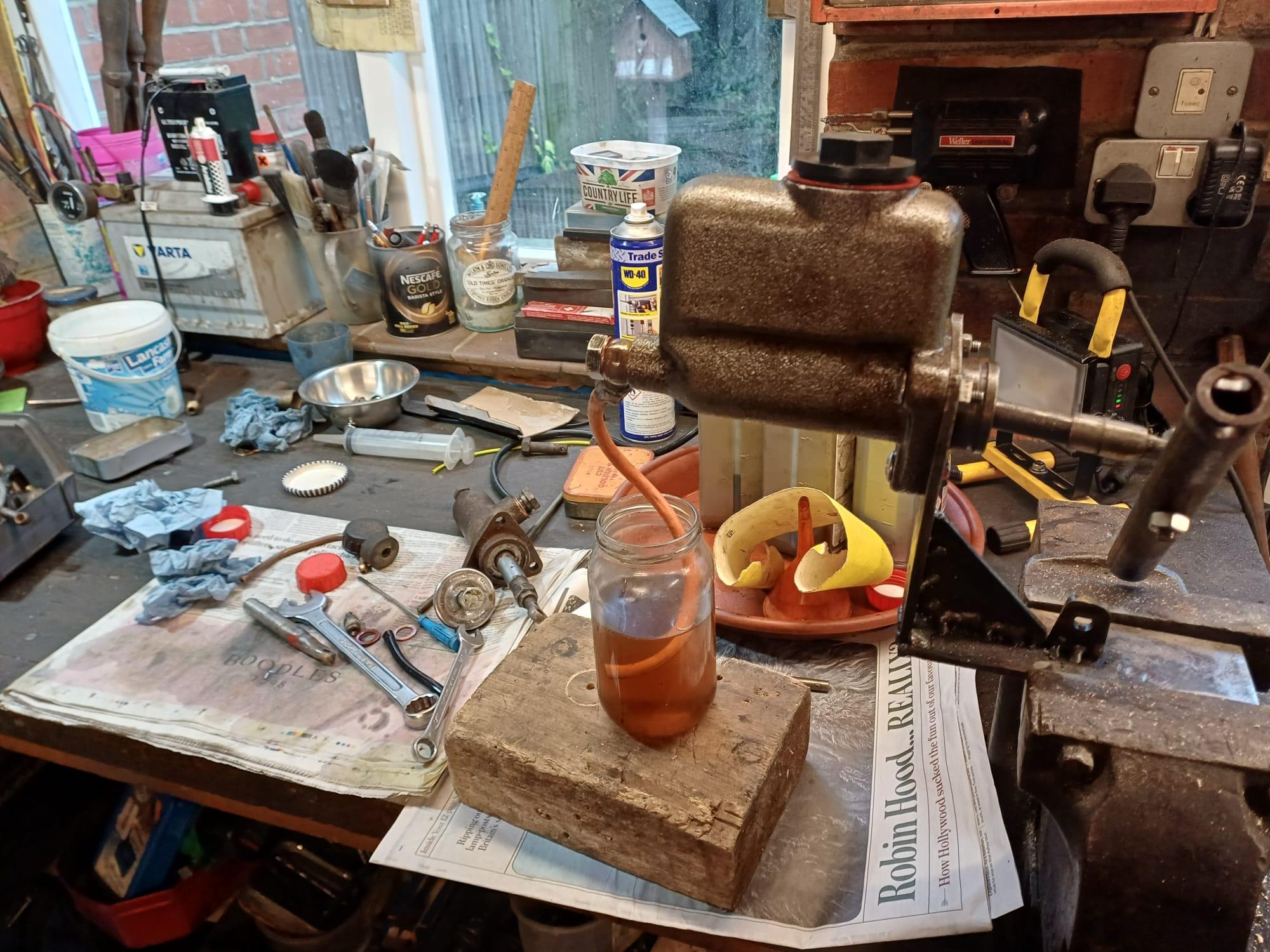

This is my new 1 1/8″ master cylinder from America. When it is on my jig on the bench as soon as I put in some dot 4 I get a firm push straight away. If I bleed the cylinder in the normal way with the ripple and a bleed pipe it works perfectly. When I put it in the car with all the brake pipes connected my pedal goes directly to the floor with all the nipples closed. I have now bleed the brakes on all 4 corners with mire than a litre of dot 4 I cannot get any pedal at all. I tried this several months ago with the same result and I put back the original 1 1/4″ master cylinder and it worked straight away after I bled the brakes in the normal way. Now I will refit the original master cylinder and I am sure it will work again. With the 1 1/4″ master cylinder fitted the brake pedal is so hard it is uncomfortable to drive.
13 January 2026 at 6:46 PM #11725Roger HayesParticipantTry and loosen the brake pipe near the master cylinder and let air out then reconnect this can often help
13 January 2026 at 6:47 PM #11726Charles GoughParticipantHello James, just a thought. It looks like your new master cylinder is not pushing out a sufficient amount of fluid out to the brake cylinders because of the smaller 1-1/8” bore.
If you work out the volume of your old master cylinder and then your new one, there will be a difference.
That difference will relate to pedal movement, it maybe the case that you are running out of pedal before the wheel cylinders lock against the drums.
If you can adjust your brake shoes to take up the slack in the wheel cylinders, your new master cylinder will then have less fluid to push out.
Your old master cylinder can push more volume being 1-1/4” in diameter. I feel there is nothing wrong with the brake system just the volume of fluid displacement of your new one.
To recap, take out the slack at the brake cylinders. Then bleed again to see if you get a pedal.
It sounds like one of those , let us know how you get on, just a thought13 January 2026 at 6:47 PM #11727Peter LoveParticipantYou perhaps need to get a pressurised brake bleeding tool they are not expensive to buy. PL
13 January 2026 at 6:47 PM #11728james smithParticipantThank you Roger, Charles and Peter for your advice. After carefully checking i have found that the new master cylinder needs a longer travel than the original one. Time for more investigation and delicate adjustment.
13 January 2026 at 6:47 PM #11729Peter LoveParticipantAlso clamp up three of the cylinders and bleed individualy. PL
13 January 2026 at 6:47 PM #11730Jon LangleyParticipantHi James, you are trying to achieve braking force with less foot pressure, as I tried to explain (probably badly) before, reducing the diameter increases fluid pressure with the same foot pressure, but longer travel is the byproduct, you can calculate everything using boyles law and pedal ratio, it is very important to keep shoe adjustment as tight as possible to keep pedal travel to a minimum as you need to minimise fluid movement. Adjust shoes to lock and go back one click, you may have some touching as you turn the wheel but not drag all the way. You can bleed all corners with wheels adjusted to lock and then back off, same principle as clamping 3 wheels as Peter suggested but a little easier. This ensures no slave cylinder movement but does not eliminate air in the cylinders, that’s another explanation all together, you should get a very hard pedal with little travel, them back off each wheel one click and check every time, pedal travel will increase every time you back off one wheel.
13 January 2026 at 7:57 PM #11738 Neil BennettParticipant
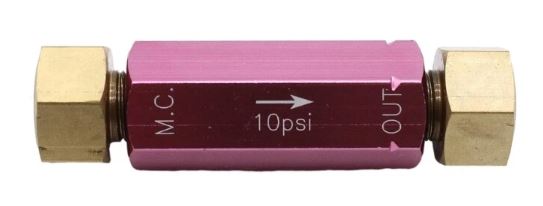
If all else fails fit a residual check valve.
14 January 2026 at 8:28 AM #11742Jon LangleyParticipantWe have a 10lb residual check valve on the K1, this is a good point from Neil the check valve keeps the lines pressurised taking up any variance in adjustment on the snail cams to lining, reducing travel to brake contact to a minimum providing that the standard springs are used on the shoes i.e. springs are neither too strong or too weak.
14 January 2026 at 10:00 AM #11744Neil BennettParticipantJames’s problem would appear to be fluid flowing back into the master cylinder (driven by brake shoe springs) rather than from the m/c reservoir, when the pedal is released from full travel. A residual check valve prevents that reverse flow.
 16 February 2026 at 1:13 PM #11926
 Ben StevensKeymaster
testing – please ignore me
Ben
-
AuthorPosts


- You must be logged in to reply to this topic.